
Getting started in Sour Milk Logistics
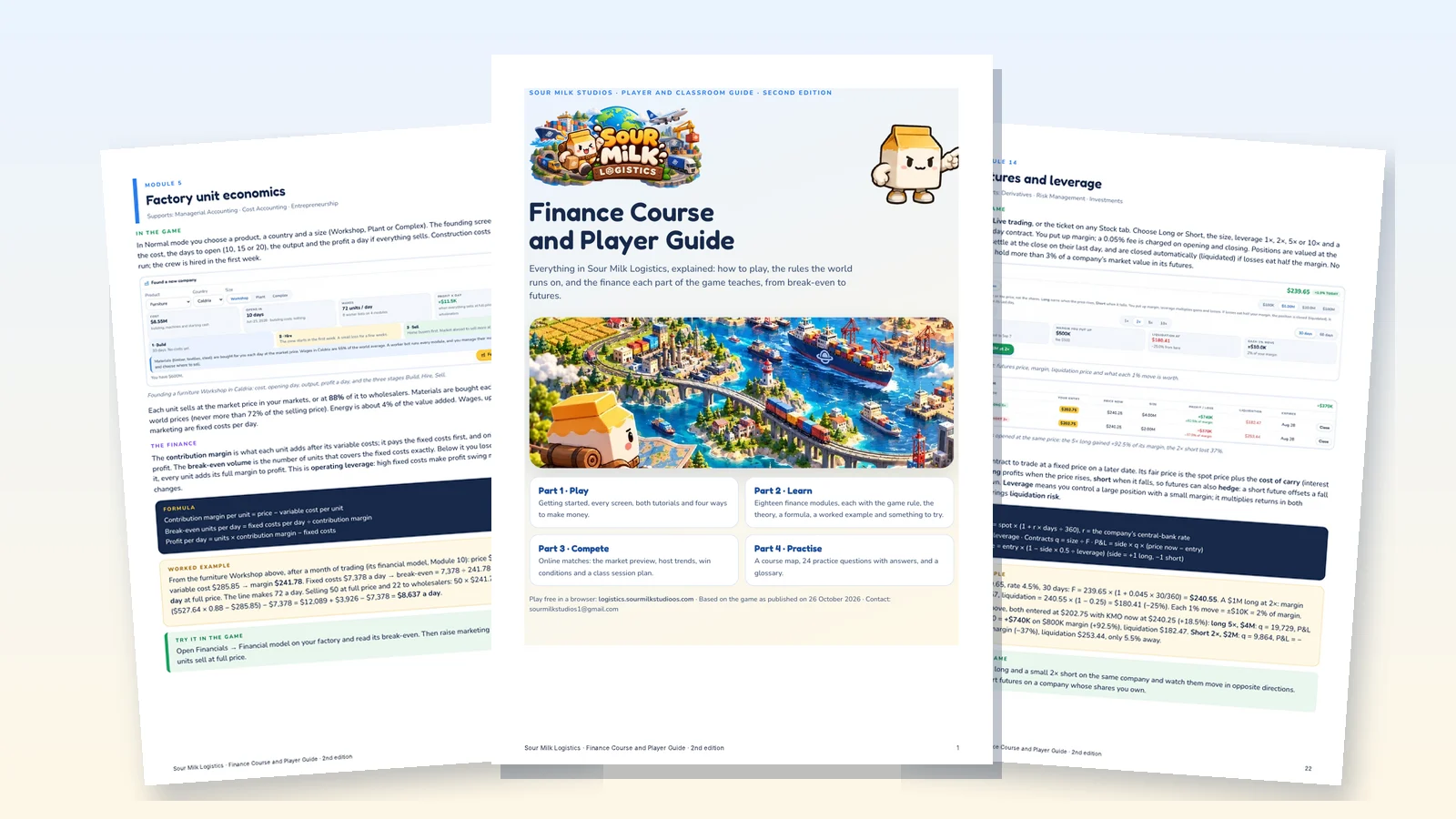
You run a small shipping company inside a working world economy of ten countries and 79 companies. Here is what to pick on the title screen, how the clock works and what each screen is for. The full guide (PDF above) goes through every tutorial step and the finance behind it.
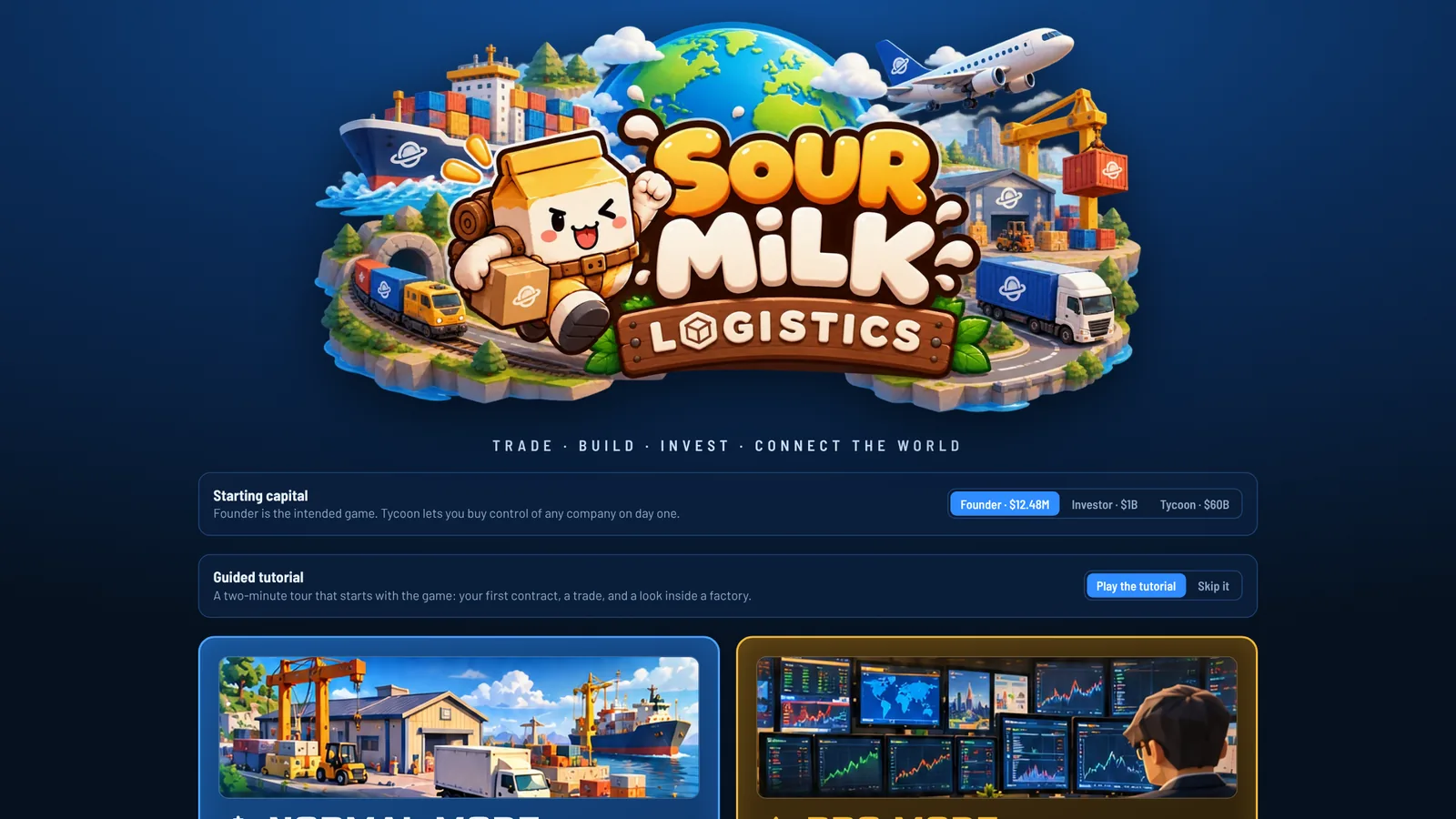
Three choices before a new game
| Choice | Options | What to pick |
|---|---|---|
| Mode | Normal or Pro | Normal first. Pro adds the full stock and bond market, central banks, interest rates, inflation and economic news. |
| Starting capital | Founder $12M · Investor $100M · Tycoon $1B | Founder is the intended game. Bigger starts let you buy into companies and build faster. |
| Guided tutorial | Play it or skip it | Play it. It takes about two minutes. |
The clock
The game starts paused. Press Play at the top, or the space bar, to start and pause. One day lasts 12 seconds at Play speed, and you can change this to 30, 20, 12, 6 or 2 seconds in the menu. A year has 360 days, a quarter closes every 90 days, and the game saves itself every 30 days in your browser.
Your first moves
- Put your ships to work. Your two feeder ships cost about $11,000 a day even when they sit in port, so cash only goes down until they carry something.
- Take a freight contract from the Contracts screen for steady income while you learn the map.
- Trade the price gaps. On the Trade screen, buy cargo in a port where it is cheap and sell it where it is scarce.
- Keep the fleet repaired. Storms and busy ports slow ships down, and worn ships cost you time.
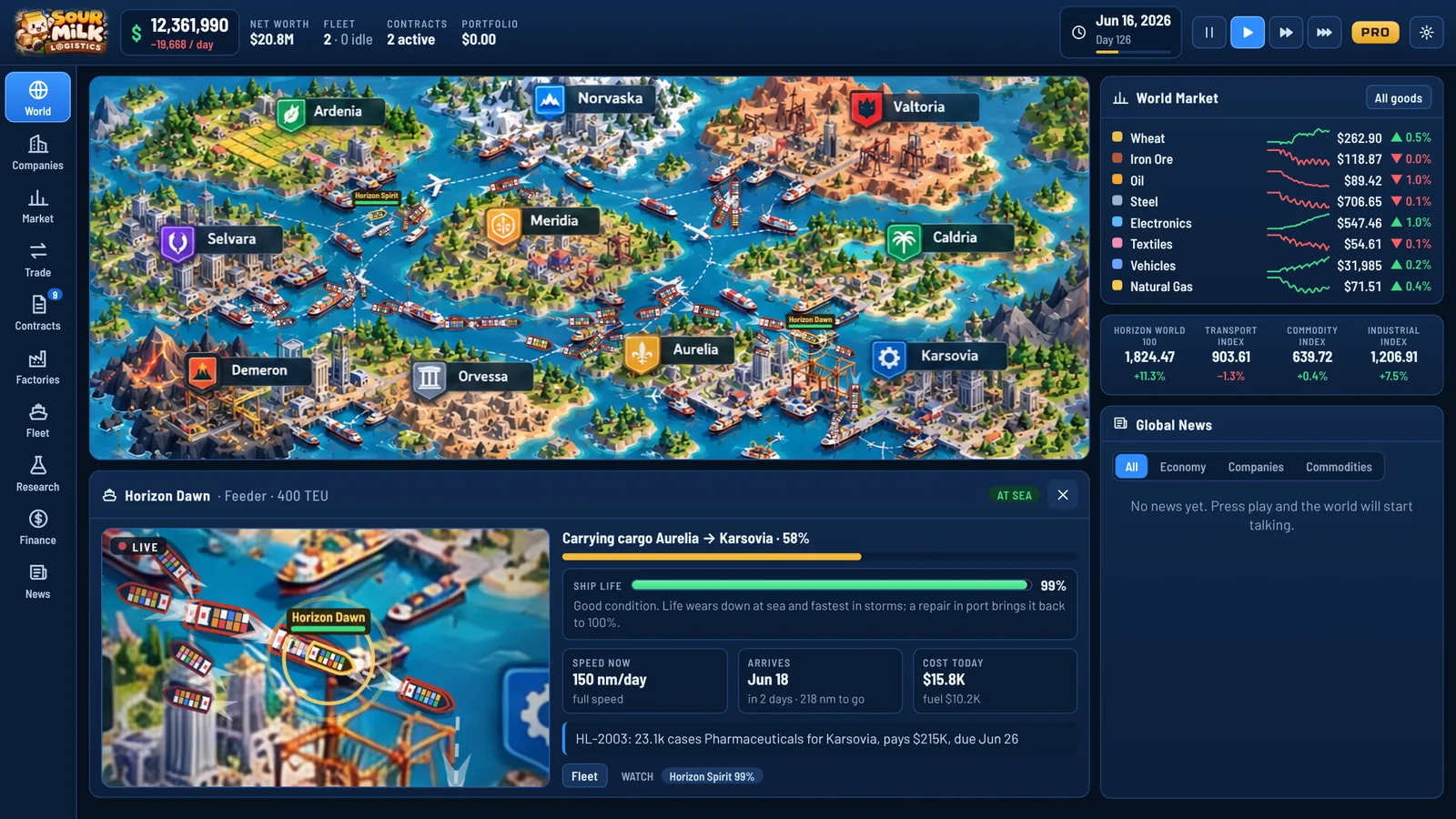
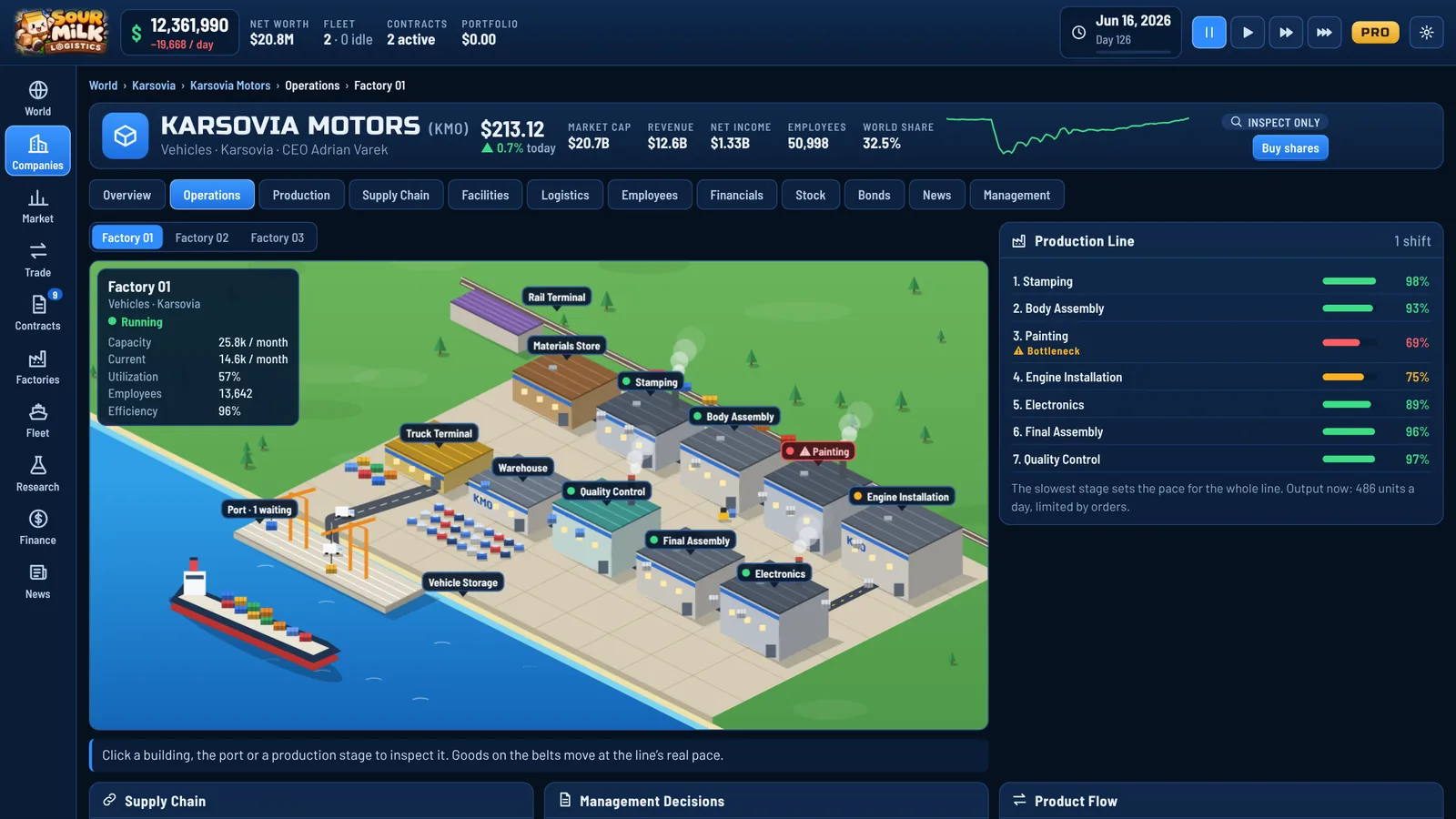
- Look inside companies. Every ship on the map is a real shipment between two companies. Open one to see its factories, suppliers and finances.
The ten screens
World shows the live map and your objectives. Companies lets you look inside any company. Market has commodity prices and stocks, plus bonds and central banks in Pro mode. Trade is for buying and selling cargo between ports. Contracts lists freight offers from shippers. Factories is where you found your own producer. Fleet holds your ships, repairs and the shipyard. Research has six projects that improve your fleet, contracts, trading and building. Finance shows net worth, cash, your credit line and shareholdings. News reports what happens in the simulation.